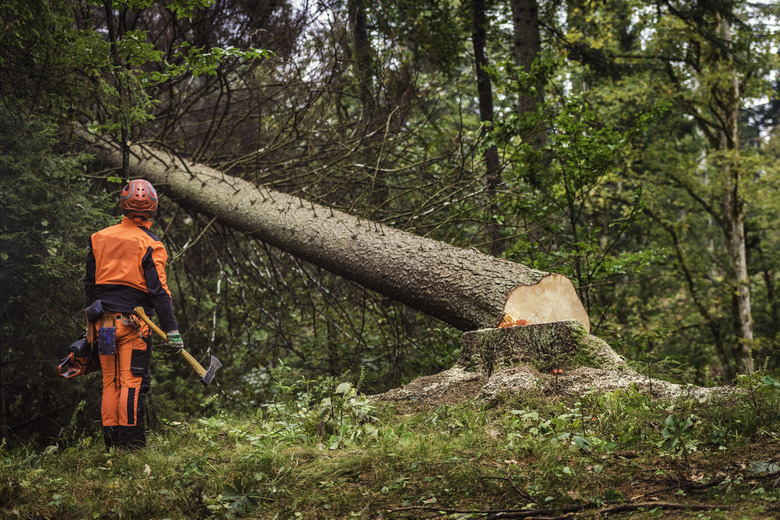
Tree felling involves a series of techniques, each of which plays a crucial role in ensuring Check this a controlled and safe removal process. Let’s take a closer look at the basic techniques involved in tree removal:
a. Planning: Before felling a tree, the arborist carefully plans the cut, taking into account the size, height, and natural tendencies of the tree. This planning phase helps determine the best notch position, the width of the hinge, and the direction of fall.
b. Notch cutting: The arborist starts the felling process by making a notch cut on the side of the tree facing the direction of fall. This notch cut guides the tree’s fall, ensuring a controlled direction.
c. Undercut: After the notch cut, the arborist makes an undercut on the opposite side of the tree, a few inches above the notch cut. The undercut weakens the tree’s base, further guiding the direction of fall.
d. Back cut: The final cut, known as the back cut, is made on the opposite side of the notch cut, a few inches higher than the undercut. The backcut completes the felling process, causing the tree to fall in a controlled manner.
These techniques require the use of chainsaws, axes, wedges, and other specialised tools, all of which must be handled with expertise and caution to ensure a safe and successful tree-felling process.
Safety Measures in Tree Felling
Pre-Felling Planning
Before starting tree felling, it is essential to plan the process to ensure the safety of the workers and the public. The following measures should be taken into consideration during the planning phase:
Evaluate the tree to determine its height, diameter, and lean
Identify any obstacles in the surrounding area, such as buildings, power lines, or roads
Determine the direction of the fall and the escape route
Ensure that the area is clear of people and pets
Obtain necessary permits and permissions from the local authorities
Use of Safety Equipment
Tree felling can be a dangerous activity, and it is crucial to use the appropriate safety equipment to prevent injuries. The following equipment should be used during cutting down a tree:
Hard hat to protect the head from falling debris
Eye protection to prevent eye injuries
Ear protection to reduce noise exposure
Chainsaw-resistant trousers to protect the legs from cuts
Chainsaw-resistant boots to protect the feet from falling debris and cuts
Gloves to provide a better grip on the chainsaw and protect the hands from cuts
Harness and lanyard to prevent falls from heights
In addition to the above equipment, workers should also be trained in the safe use of chainsaws and other tools used in tree felling. Regular safety inspections of equipment and tools should also be conducted to ensure that they are in good working condition.
Safety should be the top priority during tree removal. By following proper planning procedures and using appropriate safety equipment, workers can ensure that the process is carried out safely and efficiently.
Impact of Tree Felling
Environmental Impact
Tree felling can have a significant impact on the environment. Trees play a vital role in the ecosystem, providing habitat for wildlife, absorbing carbon dioxide, and releasing oxygen into the atmosphere. When trees are felled, these benefits are lost, and the environment can suffer.
Deforestation, which is the permanent destruction of forests, can lead to soil erosion, flooding, and loss of biodiversity. It can also contribute to climate change, as trees are important carbon sinks that help to regulate the Earth’s climate.
Tree Services & Arborist Newbury & Berkshire
Economic Impact
Tree felling can have both positive and negative economic impacts. On the one hand, it can provide valuable timber and other forest products, which can be sold for profit. This can create jobs and support local economies.
However, removing trees can also have negative economic impacts. Deforestation can lead to the loss of ecosystem services, such as water regulation and soil conservation, which can be costly to replace. It can also lead to the loss of tourism revenue, as forests are often valued for their natural beauty and recreational opportunit
 Site Title
Leave a comment